
Violence can have a devastating impact on individuals, families and communities, including those who witness it. While Devon and Cornwall remains one of the safest places in the country, violence continues to be one of the most significant challenges facing our communities. That is why preventing violence before it occurs and intervening at the earliest possible opportunity are so important.
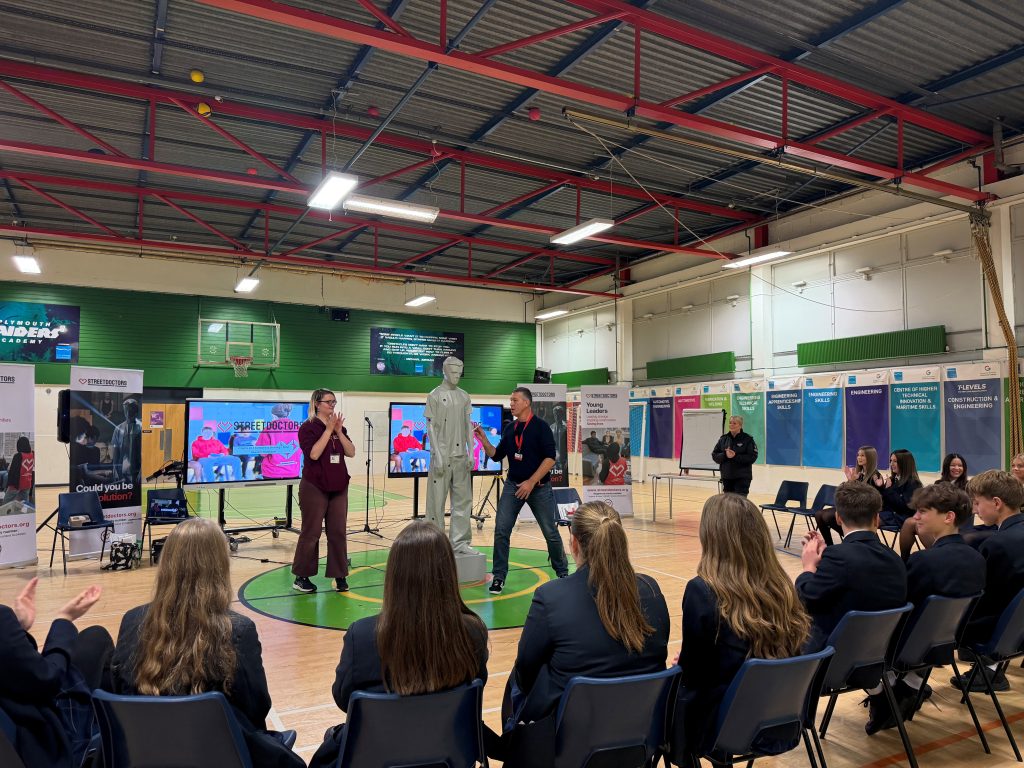
Members of my office recently attended the StreetDoctors Fatal Question Roadshow at City College Plymouth, where young people were taking part in workshops designed to challenge misconceptions about knife carrying and better understand the consequences of doing so. Our young people are largely law abiding in this area, however, one incident is one too many.
The visit took place during the latest phase of Sceptre, the national policing initiative that promotes a year-round approach to tackling knife-enabled crime through prevention, education, engagement and enforcement. Central to the campaign is the recognition that policing alone cannot solve the problem and that strong partnerships are essential to creating lasting change.
The StreetDoctors programme is an excellent example of partnership working in action.
Delivered alongside schools, youth organisations and community partners, the roadshow uses workshops to encourage honest conversations about violence and its impact. Through interactive learning, real-life victim stories and practical first aid training, young people are supported to understand the realities of knife-enabled violence and the consequences it can have for individuals, families and communities.
The programme was designed to deliver 30 workshops and reach more than 450 young people across Plymouth. Importantly, it focuses on helping young people develop the knowledge, resilience and confidence needed to make positive choices and avoid situations that could place them in a dangerous situation.
We know that many people who become involved in violence, either as victims or perpetrators, have often experienced significant adversity in their lives, including family trauma and abuse, poor mental health, or exclusion from education.
That is why prevention and early intervention are so important. George Hoskin, the Vice-Chair of Transforming Scotland in a Generation (TSIAG) Commission of Inquiry aimed at preventing violence and childhood trauma, was invited by my office to speak in Plymouth to senior leaders across Devon and Cornwall at a Serious Violence Summit earlier this year.
The aim was to see how we could learn from what they are doing, and the evidence consistently points to the importance of supporting families as early as possible. Violence is often intergenerational, and if we are serious about reducing harm, we must understand and address the root causes that can lead people towards violence in later life.
However, prevention also means reducing access to weapons and ensuring safeguards are in place. During Sceptre, officers worked with retailers across Devon and Cornwall to promote responsible sales of knives and other bladed articles. In Barnstaple, two 15-year-old police cadets took part in a test purchasing exercise involving a bladed article. Staff correctly followed Check 25 guidance, requested identification and refused the sale when it could not be provided. Their actions demonstrate the important role retailers play in helping to prevent knives and other bladed articles from falling into the wrong hands.
By working with partners to identify risks early and provide the right support at the right time, we can help break these vicious cycles and reduce the likelihood of future violence. This approach sits at the centre of the work being delivered through the legislation of the Serious Violence Duty, Community Safety Partnerships at local authority levels and the projects supported or funded by my office across Devon and Cornwall.
Programmes such as StreetDoctors demonstrate that tackling violence is about far more than enforcement. It is about understanding why violence occurs, supporting young people, building resilience and creating opportunities for individuals to make safer, healthier choices.
I would like to thank StreetDoctors, City College Plymouth, schools, youth organisations and all the professionals involved in delivering this important work. Their efforts are helping to ensure that young people have the knowledge, support and opportunities they need to build safer lives.
If we are serious about reducing violence, we need the government to recognise that investing in prevention, not just responses to violence when they occur, is vital. We across Devon, Cornwall and the Isles of Scilly are renowned for our innovation largely due to limited resources with largely rural and coastal challenges. As new powers and responsibilities are devolved to our region, we must seize every opportunity to invest in prevention, strengthen partnership working and create the conditions that allow everyone, particularly our young people, to thrive free from the threat or fear of violence.