
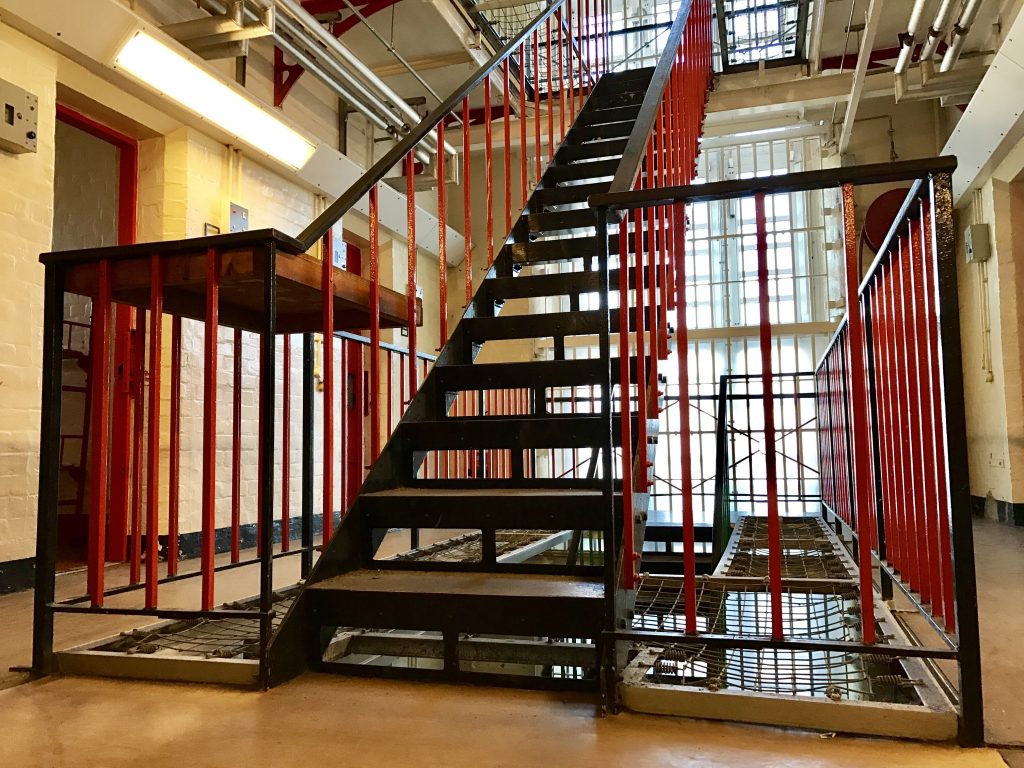
One of the most publicly contested parts of the criminal justice system is how offenders are punished and rehabilitated for their crimes. Outrage is often sparked when sentences are deemed too lenient or not reflective of the pain and suffering that has been caused not just to victims but also to their families and wider communities.
There has been decades of underfunding prisons both in staffing and buildings, and an obsession with secrecy and lack of local accountability.
Our prisons are appallingly overcrowded and courts have backlogs. That means it can take too long time before cases are heard which prolongs victims and their families suffering waiting to get justice. The only people benefiting from delays are the defendants, hoping victims and witnesses drop out – and they do.
Being sent to prison can give respite to those affected knowing they won’t see them again. Probation services are also being completely overstretched by ever increasing workloads with early releases from prison to cope with the overcrowding. We already know offenders often only serve half their sentence and now it’s even less that that with plans to aim for only a third.
Last month, major reforms to sentencing and releasing prisoners came into effect under the Sentencing Act 2026. One of the biggest changes is courts being required to stop handing out short term prison sentences of 12 months or less – apart from in specific or exceptional circumstances – for lesser offences. This is an afront to all of the efforts police make, such as with shoplifting, as most magistrates court will struggle to imprison some of our prolific offenders to give our communities some respite from crime, even if only temporary relief.
Judges now also have greater powers around suspended sentences because they can suspend them up to three years and can extend deferred sentences for longer from six months to 12 months.
Importantly, this does mean that more justice can be served by magistrates, who are people like you and me. Over the years I have spent time with them, they are stronger minded about justice and sentencing.
The overall aim of the changes this government is introducing is largely to ease overcrowding in prisons and focus more on rehabilitation within the community, dependent on the type and severity of the crime. This will be achieved through measures such as tagging, imposing restrictive zones, drug testing and restrictive conditions such as being prohibited from entering pubs, clubs and bars, but also means more work for the police and probation.
Reducing reoffending is an important aspect to stop more people becoming victims. This is why my office has led the nationally award-winning Prisoners Building Homes (PBH) which trains prisoners on day release in factories to help build modular homes, leaving with a job and money.
The biggest risk to reoffending is not having a home and job. Our reoffending rate is less than five per cent, while nationally most programmes are around 50 per cent.
Time and time again we see that criminality is frequently linked to issues such as addiction and mental health. It’s imperative the right support is in place to rehabilitate them back into society.
The Probation Service is undergoing a much-needed overhaul and modernisation with its budget being increased by up to £700 million over the next three years.
Changes will ensure probation appointment targets are met for offenders who pose the greatest risk of serious reoffending through Supervision Packages, and a big recruitment drive is underway.
A hugely important role of my office is hosting the Local Criminal Justice Board (LCJB) of which I am chairman. It brings together the senior leaders of the key agencies involved in the criminal justice system across Devon, Cornwall and the Isles of Scilly to identify priorities, address issues and deliver agreed objectives to improve the efficiency and effectiveness of the criminal justice system. It also gives the public a voice in the criminal justice system both locally and nationally.
The Devon and Cornwall LCJB have created an interactive, multimedia resource for victims of crime called Criminal Justice and You. It is the first of its kind in the country, and guides victims and witness through the criminal justice process, from reporting a crime to the outcome of a case, and what happens afterwards. Several other Police and Crime Commissioners are now replicating the resource in their own area.
In addition to this, the board hosts monthly Out of Court Resolutions (OoCR) scrutiny panel meetings to review a random sample of anonymised cases to ensure Devon & Cornwall Police is using them appropriately. Although the panel can’t alter decisions made, it can make recommendations for future learning and publishes its findings on my office’s website.
Police and Crime Commissioners, police, prosecution, courts, defence, judiciary all have a part to play to make the criminal justice system work. Last year I was honoured to be appointed a national role as co-lead for the criminal justice portfolio for the Association of Police and Crime Commissioners.
I was recognised for the work I have done over the years to improve criminal justice, including the national rollout of PBH and scrutiny of potential two-tier policing following the riots. PBH was started here in Devon and Cornwall by my office in D&C and then supported by regional Police and Crime Commissioner’s through the South West Reducing Reoffending Partnership.
My focus remains on collaboration and influence to improve local justice and ensuring the best interests of victims and witnesses and those who want to stop offending is at the centre of my thinking in everything we do.